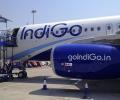
The price of aviation turbine fuel has increased by 50 per cent since January and the situation has adversely impacted IndiGo, its CEO Ronojoy Dutta said on Wednesday. He said the government should bring aviation turbine fuel (ATF) under the Goods and Services Tax (GST) and make flying affordable for consumers and viable for airlines. IndiGo is India's largest airline and with around 55 per cent share in the domestic passenger market.

India, where energy consumption per person is among the lowest in the world, has little elasticity in its fuel use as it tries to power exports and agriculture to help boost its economy and stave off a currency crisis.

Reliance has a 24 per cent conversion rate of 'oil-to-chemicals' at present and may be targeting 70 per cent conversion.

The satta market is accepting bets on how many times Modiji will mention Nehru at his election rallies, says A Ganesh Nadar with a wink.
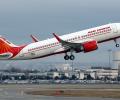
Air India on Tuesday signed agreements with Airbus and Boeing for acquiring 470 planes for an estimated $70 billion at list prices. The Tata Group-owned airline had announced that it will buy 470 aircraft, including wide-body planes, in February this year. The "firm orders include 34 A350-1000, 6 A350-900, 20 Boeing 787 Dreamliners and 10 Boeing 777X widebody aircraft, as well as 140 Airbus A320neo, 70 Airbus A321neo and 190 Boeing 737MAX narrow-body aircraft," the airline said in a release.

India's economic growth will be above 6 per cent in the current fiscal as the country has managed to strengthen its macroeconomic stability and performance even in a period of large global shocks, RBI Monetary Policy Committee (MPC) Member Ashima Goyal said on Monday. Goyal further said that a global slowdown reducing India's export growth, geopolitics fueling oil and food prices, and erratic weather are some of the continuing risks that the country faces. "India has managed to strengthen its macroeconomic stability and performance even in a period of large global shocks.

China on Tuesday announced a major policy change for its crisis-ridden power sector by allowing coal-fired power plants to charge their industrial and commercial customers market-driven prices. The National Development and Reform Commission (NDRC) of China said the electricity generated by coal-fired plants would discover price in market trading "in an orderly manner" from October 15. This is being done to pass on the high costs of coal and is being held up as the boldest reform in the Chinese power sector.

Warning that volatility in international food and fuel prices may be on the way to becoming a long term and global phenomenon, India on Thursday called for a coordinated effort at the global level to control inflation.
Power generating companies (gencos) that use imported coal to produce electricity, may find it difficult to switch on their idle units immediately in the wake of high fuel costs, several players have told Business Standard. Recently, the Union power ministry had invoked Section 11 of the Electricity Act mandating all imported coal-based plants to generate power at full capacity. However, some generating companies that use imported coal, argue that it is simply unviable for them to produce power when the price of coal in the international market is high, while the per-unit price of power has been capped at Rs 12 per unit on the domestic power exchange.
After Reliance Industries Ltd and its partner bp plc of the UK, Nayara Energy - the nation's largest private fuel retailer - has started selling petrol and diesel at Re 1 less than the fuel sold by state-owned retailers, officials said. While state-owned Indian Oil Corporation (IOC), Bharat Petroleum Corporation Ltd (BPCL) and Hindustan Petroleum Corporation Ltd (HPCL) continue to hold prices despite a drop in international rates, private fuel retailers have started passing on the benefit to consumers. "To further stimulate domestic consumption and cater to local customers better, we have introduced a Re 1 discount in our retail outlets until the end of June 2023," a spokesperson for Nayara Energy said.
'Pump prices of petrol and diesel have reached historical highs. An unwinding of taxes on petroleum products by both the Centre and the states could ease the cost-push pressures,' the Monetary Policy Committee (MPC) has said.
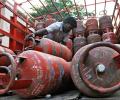
Cooking gas LPG price was on Thursday hiked by Rs 3.50 per cylinder, the second increase in rate this month following the firming of international energy rates. Non-subsidised LPG now costs Rs 1,003 per 14.2-kg cylinder in the national capital, up from Rs 999.50 previously, according to a price notification of state-owned fuel retailers. This is the second increase in LPG rate this month and the third in less than two months. The price was hiked by Rs 50 per cylinder on March 22 and again by the same quantum on May 7.
SIAM said it expected 10-12 per cent growth in 2012-2013.
Automakers in India posted their worst growth in recent times in May 2011.

The wholesale price-based inflation eased to a five-month low of 13.93 per cent in July on easing prices of food articles and manufactured products. The WPI-based inflation softened for the second consecutive month in July, raising hopes of further decline in wholesale prices in the months to come. The Wholesale Price Index-based inflation, after scaling a record high of 15.88 per cent in May, declined to 15.18 per cent in June. It was 13.43 per cent in February. It was 11.57 per cent in July last year.

Capa lauded govt's efforts in rescuing SpiceJet.

The wholesale price index (WPI)-based inflation eased in January to 0.27 per cent, mainly due to moderation in prices of food items. WPI inflation was at 0.73 per cent in December 2023. The WPI inflation was in the negative zone from April to October and had turned positive in November at 0.39 per cent.

The government on Tuesday increased the windfall profit tax on crude oil produced in the country and reduced the levy on exports of diesel. The tax, levied in the form of Special Additional Excise Duty or SAED, on domestically produced crude oil was increased to Rs 9,800 per tonne from Rs 9,050 a tonne, according to an official notification. SAED on the export of diesel was reduced to Rs 2 per litre from Rs 4 a litre and on jet fuel or ATF to nil from Rs 1, the notification said.

Petrol price on Tuesday breached the Rs 85 a litre mark in the national capital and diesel neared record high after rates were raised for the second consecutive day. Petrol and diesel prices were hiked by 25 paise per litre each, according to a price notification from oil marketing companies. This took the petrol price in Delhi to Rs 85.20 per litre and to Rs 91.80 in Mumbai. Diesel rate climbed to Rs 75.38 a litre in the national capital - just shying away from its record high - and to an all-time high of Rs 82.13 in Mumbai, the price data showed.

India is poised to be the fastest-growing major economy in the world and an engine of global growth despite global headwinds, says leading industrialist and Aditya Birla Group Chairman Kumar Mangalam Birla. The economic activity in India has witnessed a sharp recovery to pre-pandemic levels on the back of a rapid and widespread rollout of the vaccination programme, Birla said in the latest annual report of UltraTech Cement Ltd. "A strong digital ecosystem, fiscal and monetary policy and various government schemes helped small and medium enterprises and the worst affected sections of the population to survive while reviving demand and bringing the economy back on track," said Birla while addressing UltraTech's shareholders.

Do not underestimate the ingenuity of the Deep State in America to have its way. Keeping the guard down will be a catastrophic mistake on the part of the Delhi establishment. We could get hit when least expected. That's what happened in Bangladesh and Syria, warns Ambassador M K Bhadrakumar.
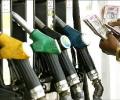
Finance minister Pranab Mukherjee is believed to be in favour of giving state-run oil firms freedom to fix price of petrol and diesel in step with cost, as he feels the current moderate global oil rates may be the last window India has to deregulate fuel pricing.
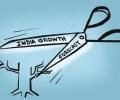
India's projected economic growth for 2022 has been downgraded by over two per cent to 4.6% by the United Nations, a decrease attributed to the ongoing war in Ukraine, with New Delhi expected to face restraints on energy access and prices, reflexes from trade sanctions, food inflation, tightening policies and financial instability, according to a UN report released on Thursday. The UN Conference on Trade and Development (UNCTAD) report downgraded its global economic growth projection for 2022 to 2.6 per cent from 3.6 per cent due to shocks from the Ukraine war and changes in macroeconomic policies that put developing countries particularly at risk. The report said while Russia will experience a deep recession this year, significant slowdowns in growth are expected in parts of Western Europe and Central, South and South-East Asia.

Oil firms' borrowings could fall by up to Rs 15,000 cr, govt's subsidy bill by 12% .

The S&P BSE Sensex and the Nifty50 have hit record highs amid the poll outcome-triggered bull frenzy at the bourses. Most analysts feel that the indices are on course to rise further over the next few months - till the general elections - albeit amid intermittent corrections - largely triggered by global developments. Bharatiya Janata Party's (BJP's) win in the three state elections of Madhya Pradesh (MP), Rajasthan and Chhattisgarh, analysts at Jefferies believe, reinforces the consensus expectations of a Modi win 2024 national elections with a greater likelihood of over 300 seats for the BJP.

A little away from the city in the northern suburbs, vegetables are 15-30 per cent costlier.
After the success of Amaze, Honda managed to be the third largest auto maker in the country. Here's how the company plans to keep the momentum going.
With declining jet fuel prices, Air India has once again taken the lead in introducing further cuts in its fares on key domestic routes, which may lead to another round of 'fare war' among domestic carriers, including the no-frill ones.
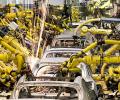
The sharp increase in commodity prices on account of the Russia-Ukraine war has put automakers in a fix. After the frequent price hikes in the current fiscal, manufacturers fear that any more price increases may further dent the already weak demand in certain segments. "We have taken several hikes and cannot immediately do it again. "We will have to closely watch the situation and act accordingly," said an official at an auto firm, declining to be identified. Even for companies like Tata Motors Passenger Vehicles, which has had a strong volume run and a robust order book, passing on the entire costs has been tough.
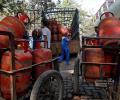
Cooking gas LPG price on Wednesday was hiked by Rs 50 per cylinder, the third increase in rates since May on firming international energy prices. Non-subsidised LPG now costs Rs 1,053 per 14.2-kg cylinder in the national capital, up from Rs 1,003 previously, according to a price notification of state-owned fuel retailers. Common households pay non-subsidised rates for the cooking gas they buy, after the government restricted subsidy to just poor beneficiaries who got connections under the Ujjwala scheme.
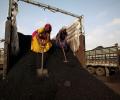
Conflicting views on Coal India (CIL) might leave investors confused. The bullish perspective that India has strong power demand (and also high steel production) means high demand for coal. As CIL is the monopoly producer of coal -- supplying over 80 per cent of the domestic requirement - the public sector undertaking should be a beneficiary of the rising power demand.
Civil Aviation Minister Praful Patel said Indian airlines had suffered major losses in the past two years over the unprecedented rise in prices of aviation turbine fuel.
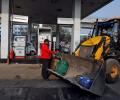
Petrol price in the national capital neared the Rs 85 a litre mark while diesel rates in Mumbai were close to Rs 82 as fuel prices were raised by 25 paise per litre each on Monday. Petrol now costs a lifetime high of Rs 84.95 per litre in Delhi while diesel comes for Rs 75.13, according to a price notification from oil marketing companies. The price hike on Monday came after three days of unchanged rates. Prices were last hiked by 50 paise a litre in two instalments on January 13 and 14.

Adding petrol and diesel to GST was a challenging task due to their significant role as revenue generators for both the central and state governments.
A day after the Trinamool Congress said it was withdrawing support to the UPA government, in protest against the reform measures announced by the government, the Federation of Indian Chambers of Commerce and Industry held a press conference to buttress its views on the importance of sustained reform process.

It is nearly impossible to effectively control inflation when it is not properly measured.
India Inc on Friday said major announcements made by government, including operationalisation of 51 per cent FDI in multi-brand retail, are huge "mood lifters", besides dispelling the impression of any policy paralysis in the government.
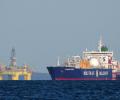
Russian oil supplies to India will continue to flow unhindered and suppliers will come up with ways to sidestep secondary sanctions, a Russian official told Business Standard.
While okra was being sold for Rs 100-120 a kg and cauliflower for Rs 120-140 a kg in Mumbai and its suburbs, all other vegetable prices have increased by almost 100 per cent since July 20.

'There will be a series of rate hikes, but the pace and quantum will depend on how the economy in the US and the rest of the world behave.'
